Case study · TU Eindhoven
Heat Aura
A home has controls for heat, for light, for ambience, all separate, most of them screens. Heat Aura folds them into one physical hub whose feedback you can feel before you act, and whose merger produces something none of its parts offer alone.
- Role
- Group project, team of five: rich-interaction methodology; involved at every step
- Context
- MSc Industrial Design, TU Eindhoven
- Timeline
- February to April 2024
- Scope
- Rich interaction · Tangible interface · Prototyping
01Comfort
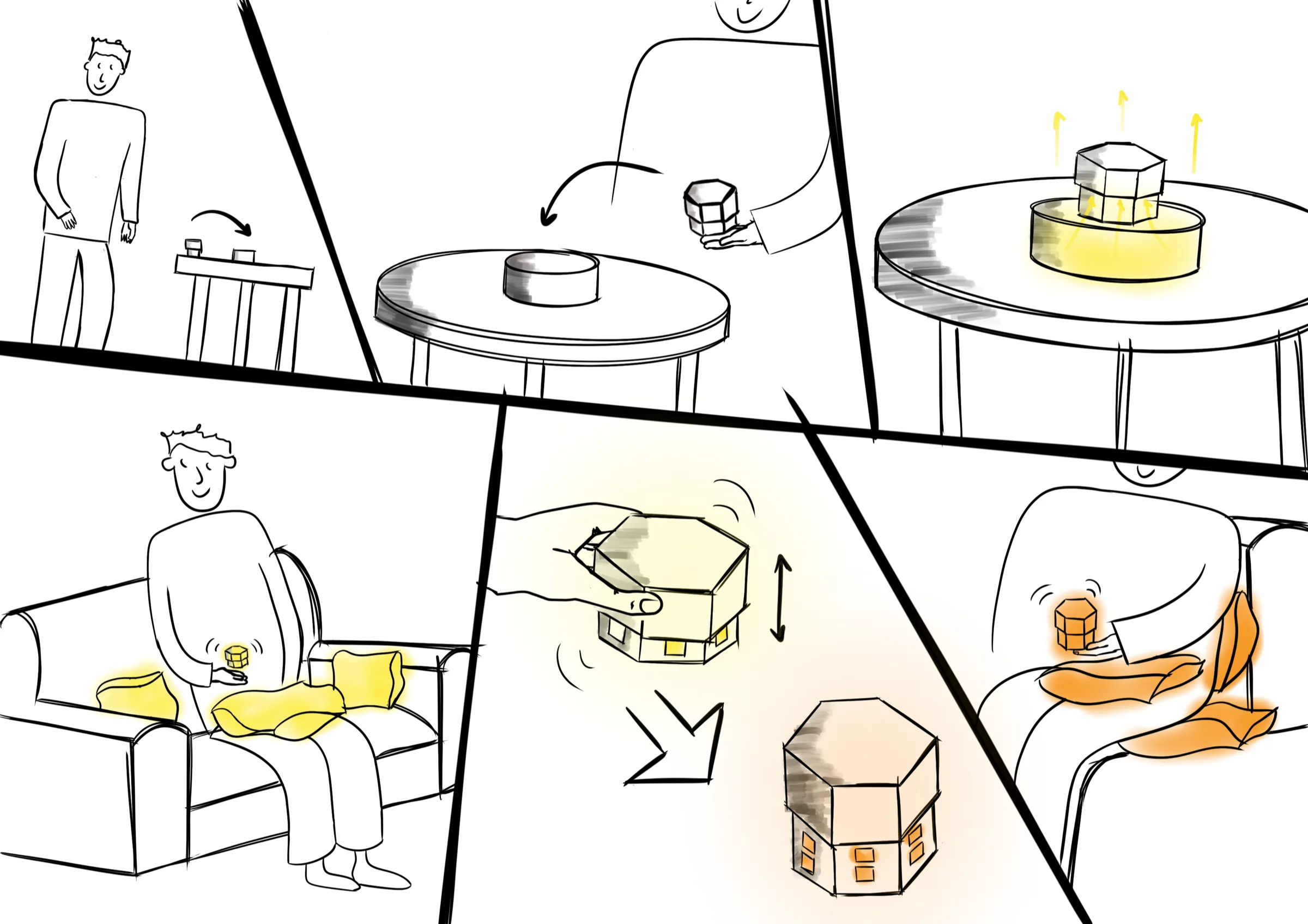
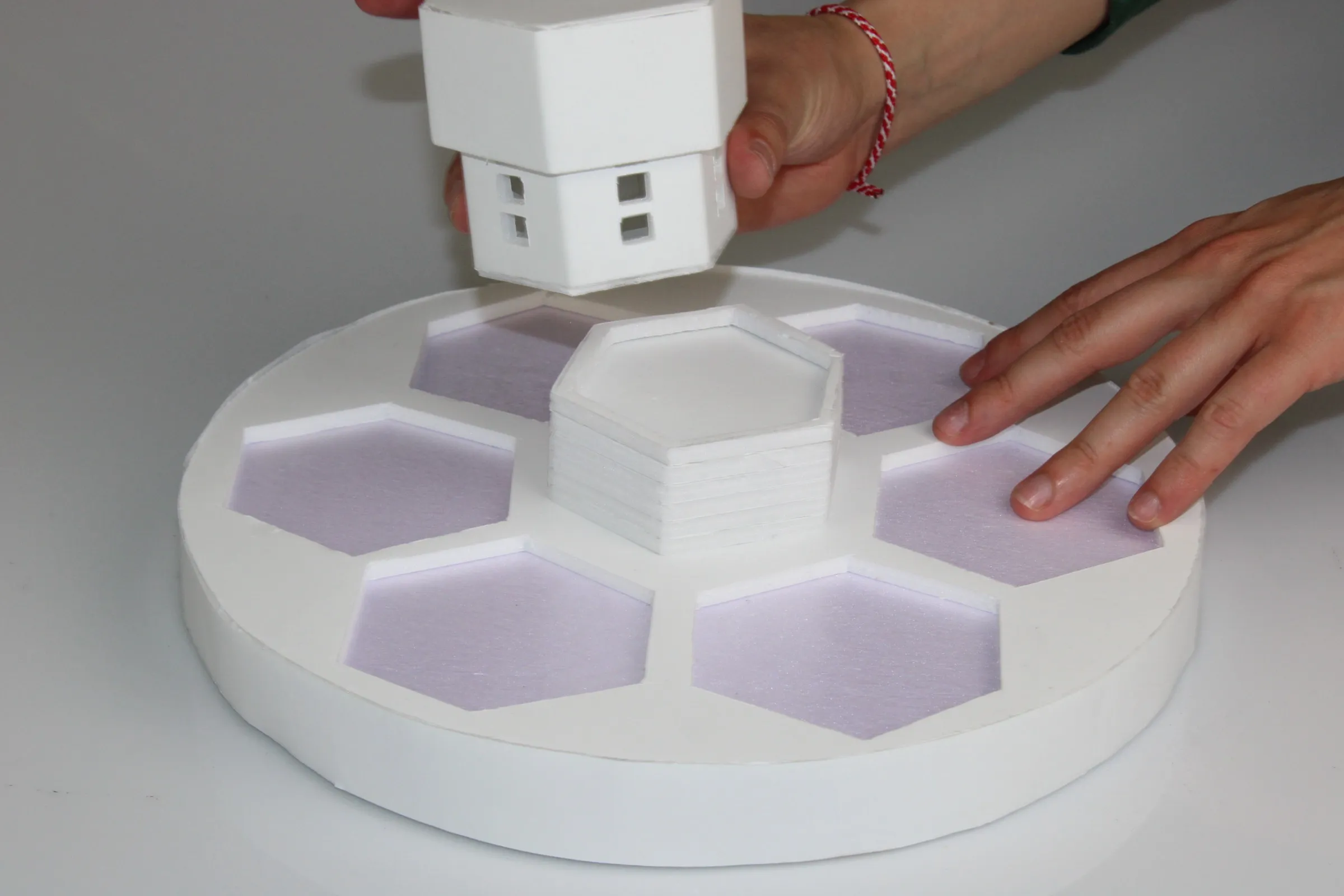
The brief asked for rich interaction: controls whose form, weight and resistance carry the meaning, so the feedback arrives before the action does. The first study took comfort: a heated-pillow control extracted from a central hub. Pulling it apart exposes more air intakes; more opening, more warmth. The mapping is the mechanism.
Foam-core prototypes made the interaction testable within days, and every round confirmed the same principle: you could feel what the control was going to do without having to think much about it.
The control should answer while your hand is still deciding.
02Convenience
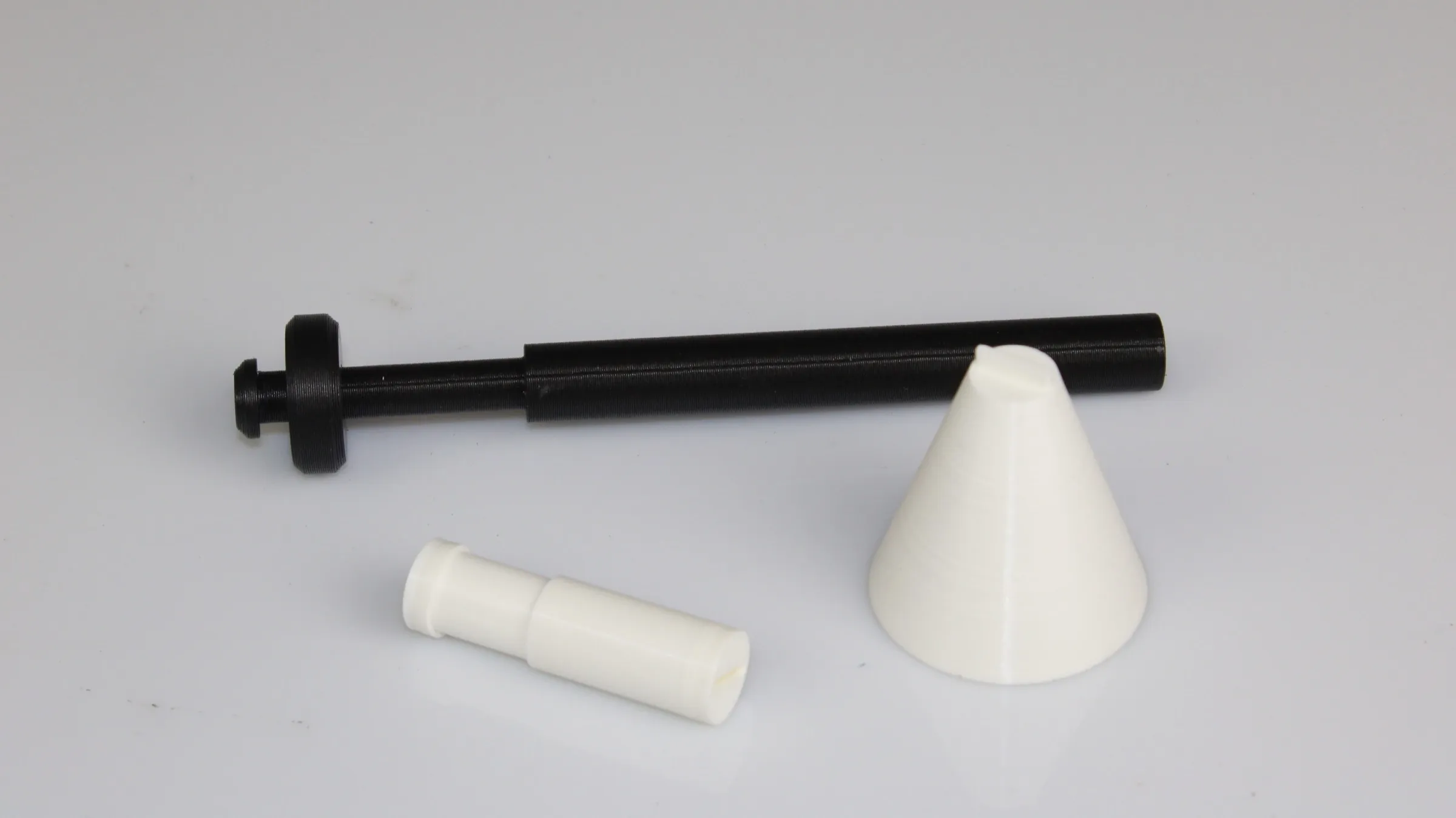
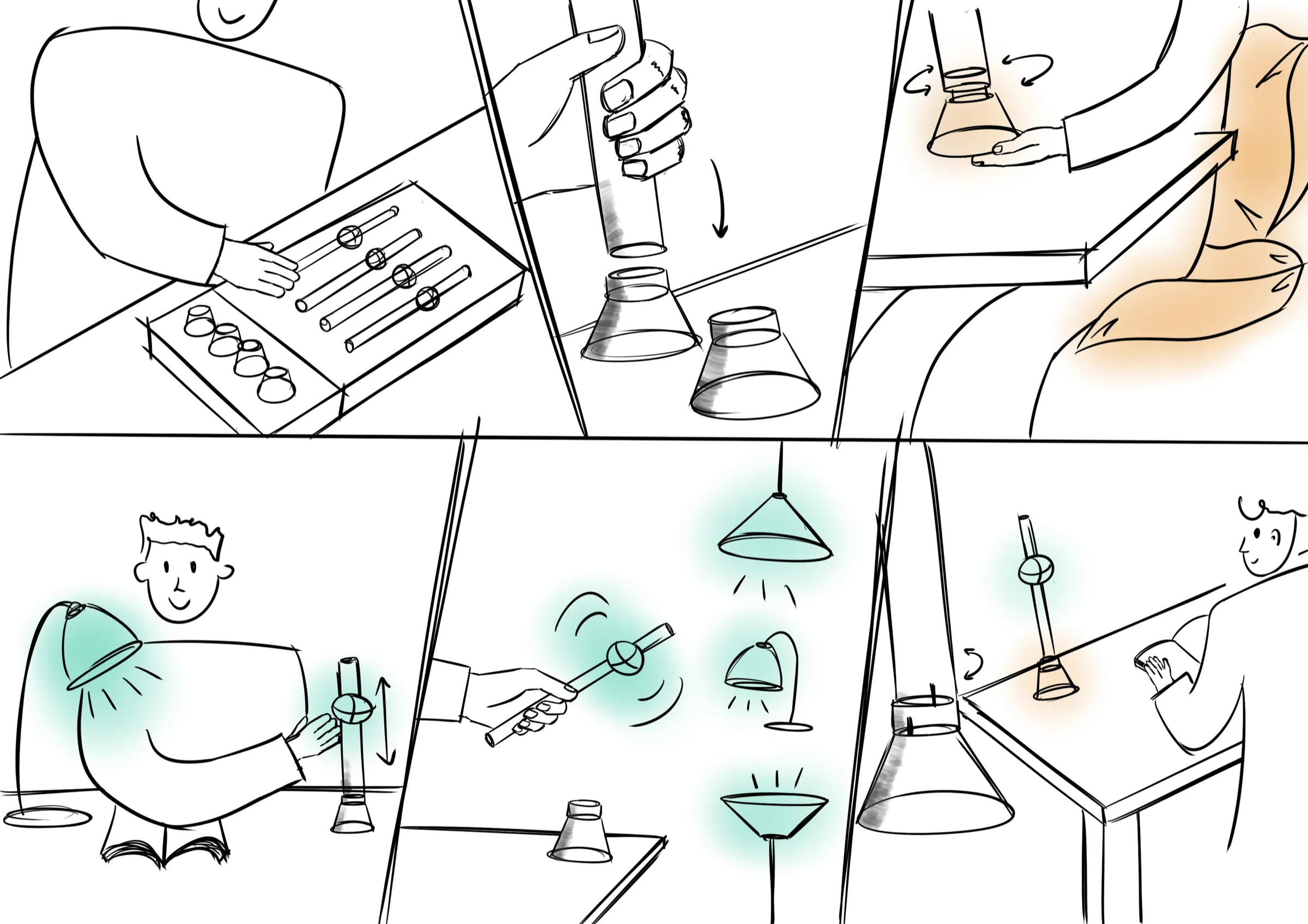
The second study took convenience: a wand for light. Point it toward a lamp to claim it, rotate the ring to set colour and push it towards the lamp for brightness.
This concept also considered a merger with the first comfort concept. Connect the wand or the heat control to the other and everything inside a shared radius starts answering at once: an IoT bubble, and for a while it was the project’s emergent functionality.
The wand is also the iteration that failed usefully. In the hand it produced a different kind of interaction than intended, and it stayed stubbornly a light control: nothing about a wand suggested how heating would join it. That pushed the team toward a shape general enough to repeat, and the Heat Aura design is what replaced it.
03Merger
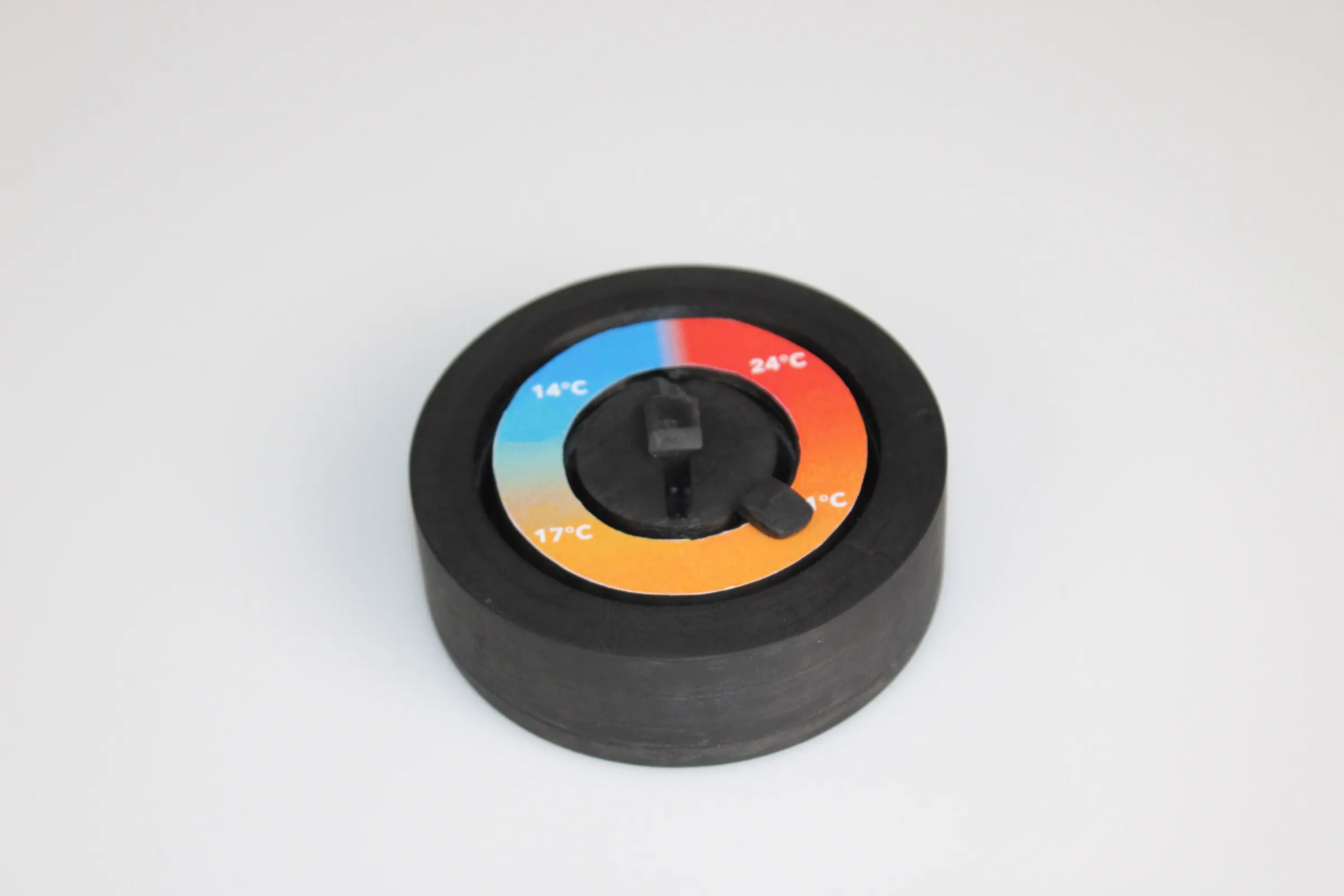
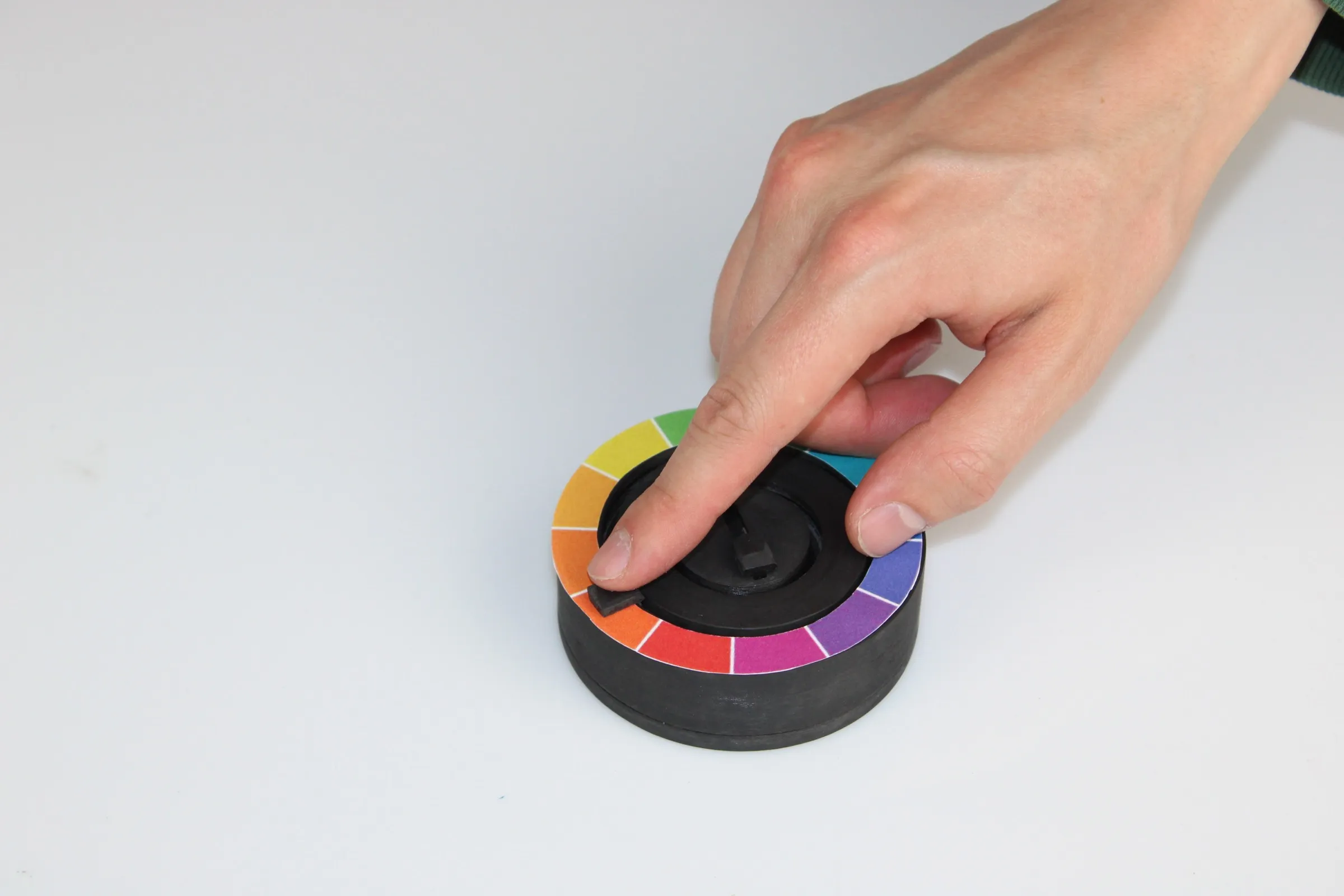
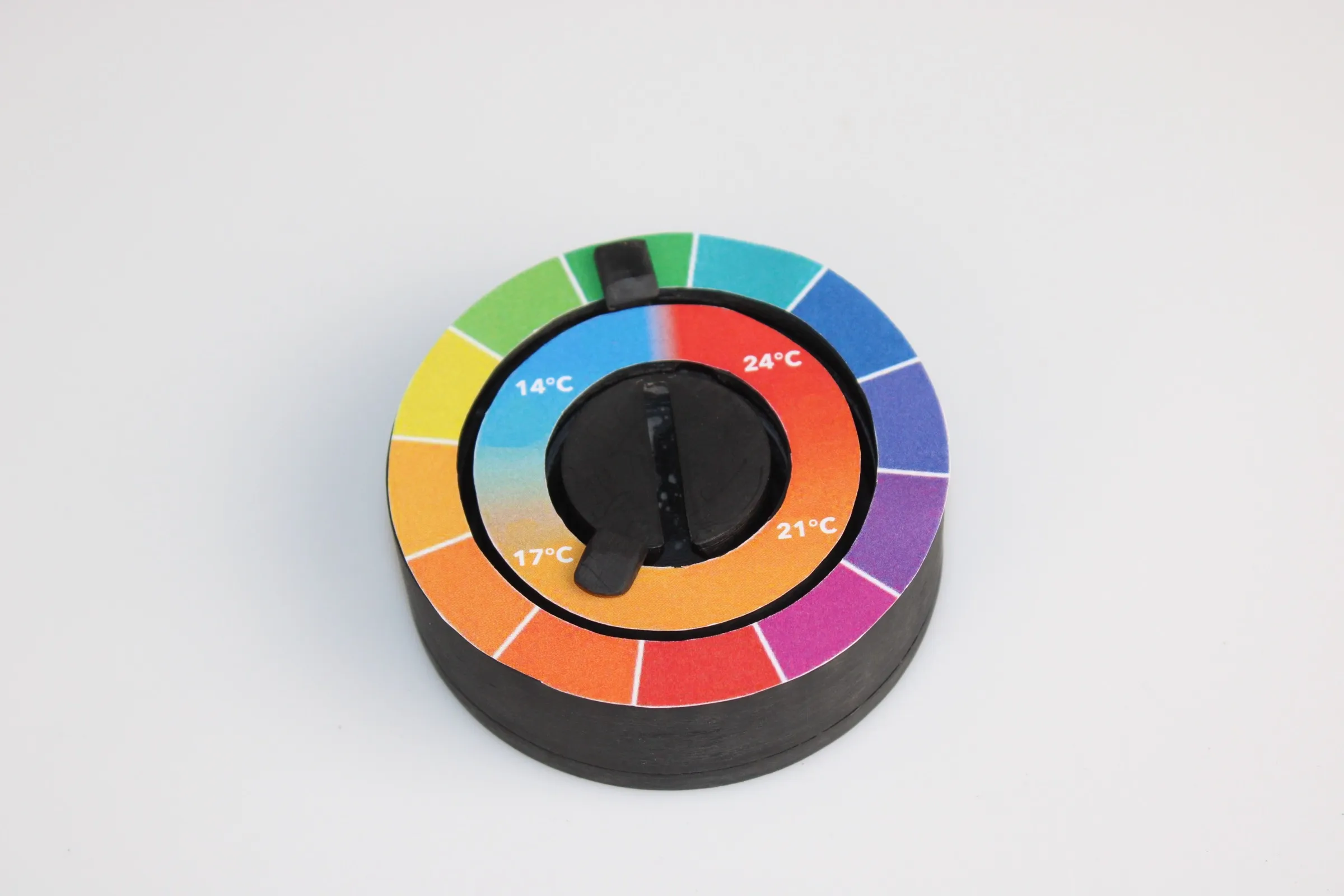
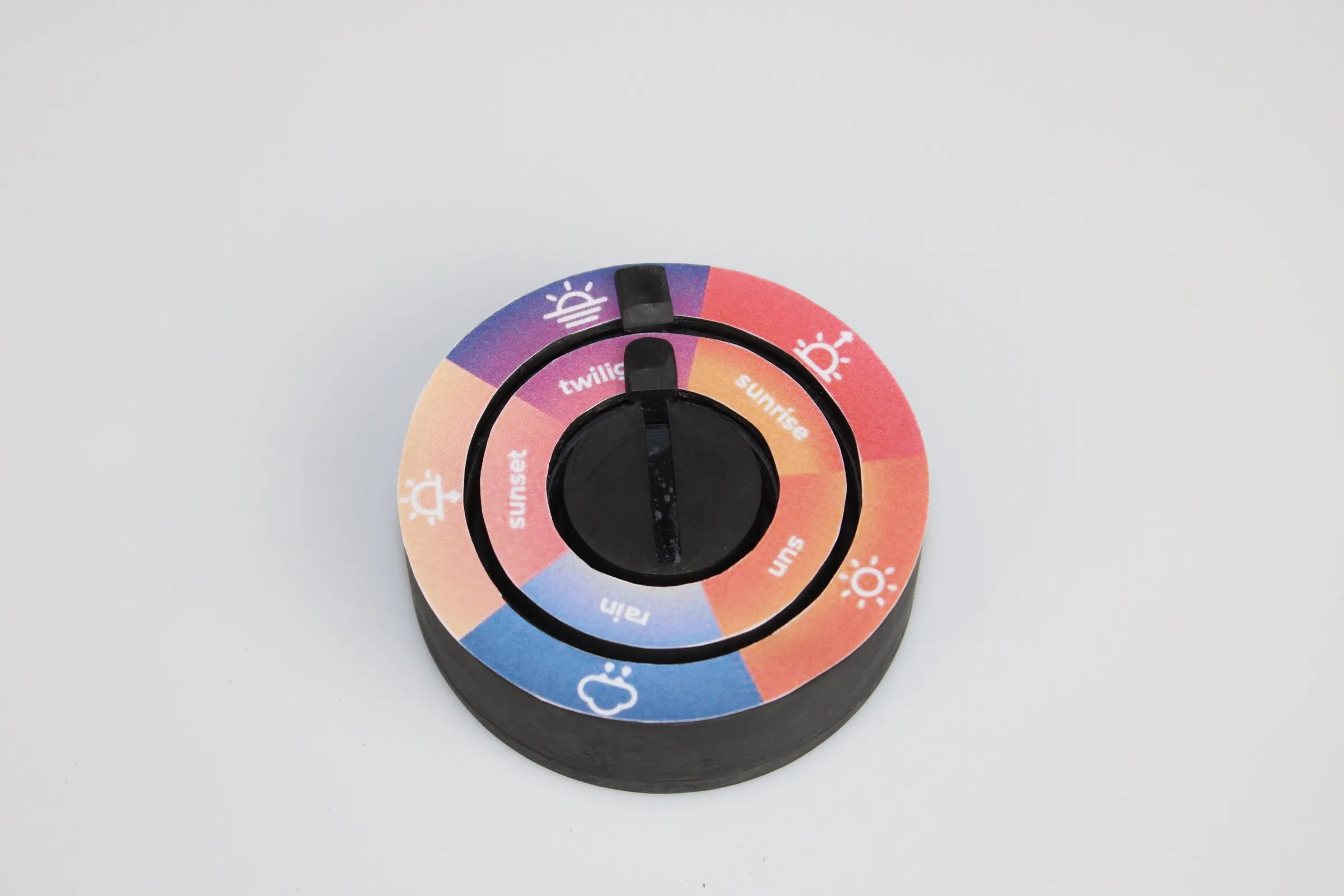
Each ring is controlled by a slider: push it from the centre out to a ring to wake that system, then run it around the ring to set the value. Slide the two sliders together, between the light ring and the heating ring, and the object stops offering separate controls at all. That is ambience, and it holds five settings, sunrise, sun, rain, sunset and twilight, each one a paired state of colour temperature, brightness and warmth. They track the daylight cycle because that cycle drives sleep and alertness, which makes the mode a health argument rather than a mood light. Pull the sliders apart and individual control returns.
The mode is built to keep reaching outward: because a setting like twilight describes a whole room rather than one appliance, it can take other smart-home systems with it, speakers included.
04Hub
The final hub is 3D printed and sanded to a hand-warm finish, with two removable rings, one for light, one for temperature, which runs 14 to 26 degrees. Docked, the rings run the whole house. Lift one off and control decentralises to what is around you: carry it to the sofa, adjust from there, dock it back and the hub is whole again. The controls that stop applying stop being offered, so a ring in your hand no longer pretends it can dim the hallway.
It is built to be added to. The ring is a shape the system can repeat, so a sound module or a humidifier would arrive as another ring around the existing ones and join ambience rather than bolt a new mode onto the side. That was the real reason for abandoning the wand.
Two things the reflective paper is honest about. Colour and intensity ended up sharing one slider, resolved with a two-second pause that hands the ring from one to the other, and the paper calls this a fault in plain words: the parameter is overloaded, and it was overloaded to keep the system consistent enough to grow. The second is that some states can only be read off the ring’s small display, which is precisely what rich interaction says a form should have made unnecessary.