Case study · TU Eindhoven
Disconnected Controller
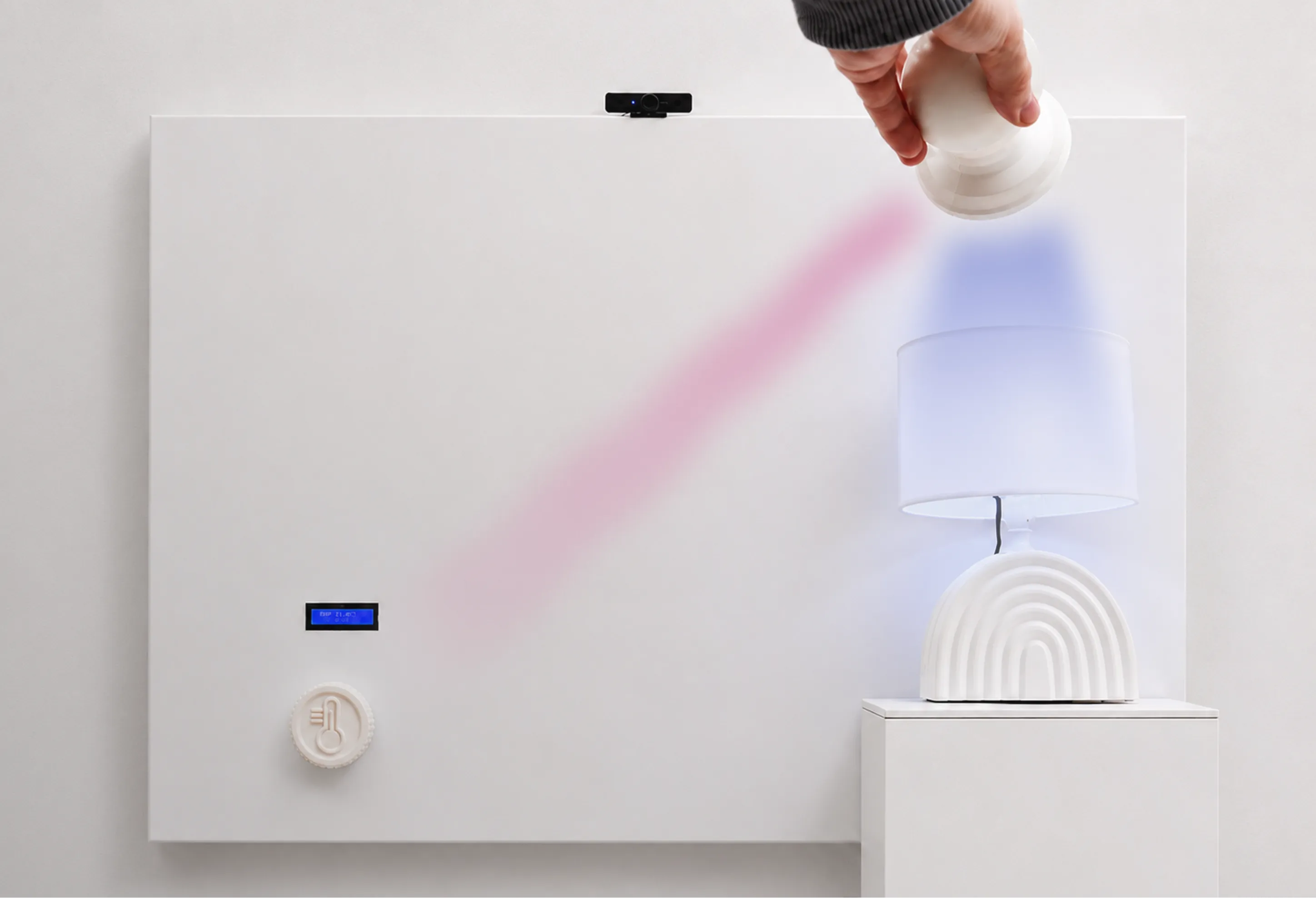
The smart home made everything controllable and put every control in the same place: your phone. This project keeps the remote control and drops the smartphone: a twistable, doorknob-shaped object tracked by a camera, so the interface stays physical, and you can truly detach while still remaining in control.
- Role
- Individual project: concept, build and evaluation
- Context
- MSc Industrial Design, TU Eindhoven
- Timeline
- November 2023 to February 2024
- Scope
- Concept · Computer vision · Working prototype · Research paper
01Question
Every convenience of the smart home currently routes through a screen that also carries your email, your news and everyone else’s opinions. Checking the thermostat costs a slice of your attention. The project asked whether you could keep remote control of the home while disconnecting from the digital world entirely: no smartphone, no app, no account.
The answer had to be an object: something that lives in the room the way a remote used to, that anyone present can pick up and use: control as furniture, not as a session on somebody’s phone.
Convenience shouldn’t cost you your attention.
02Form
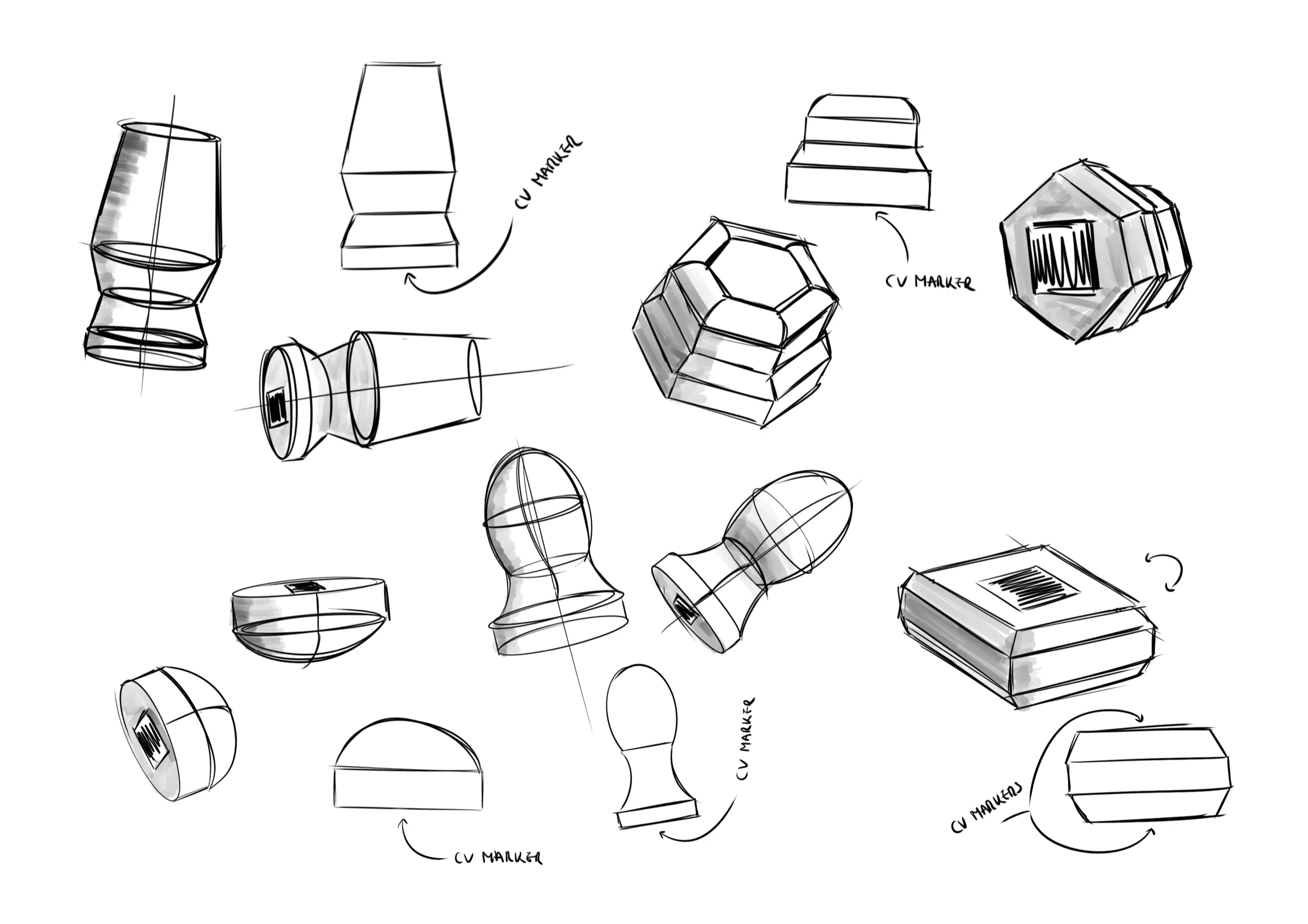
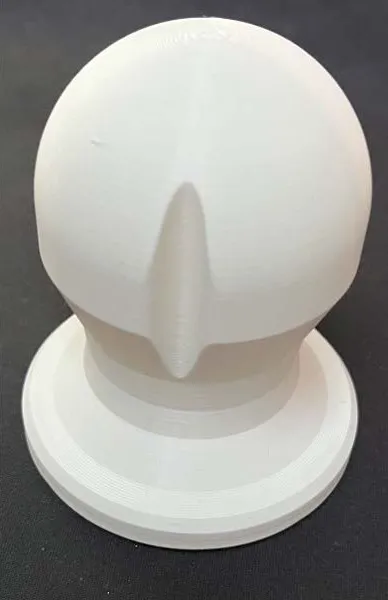
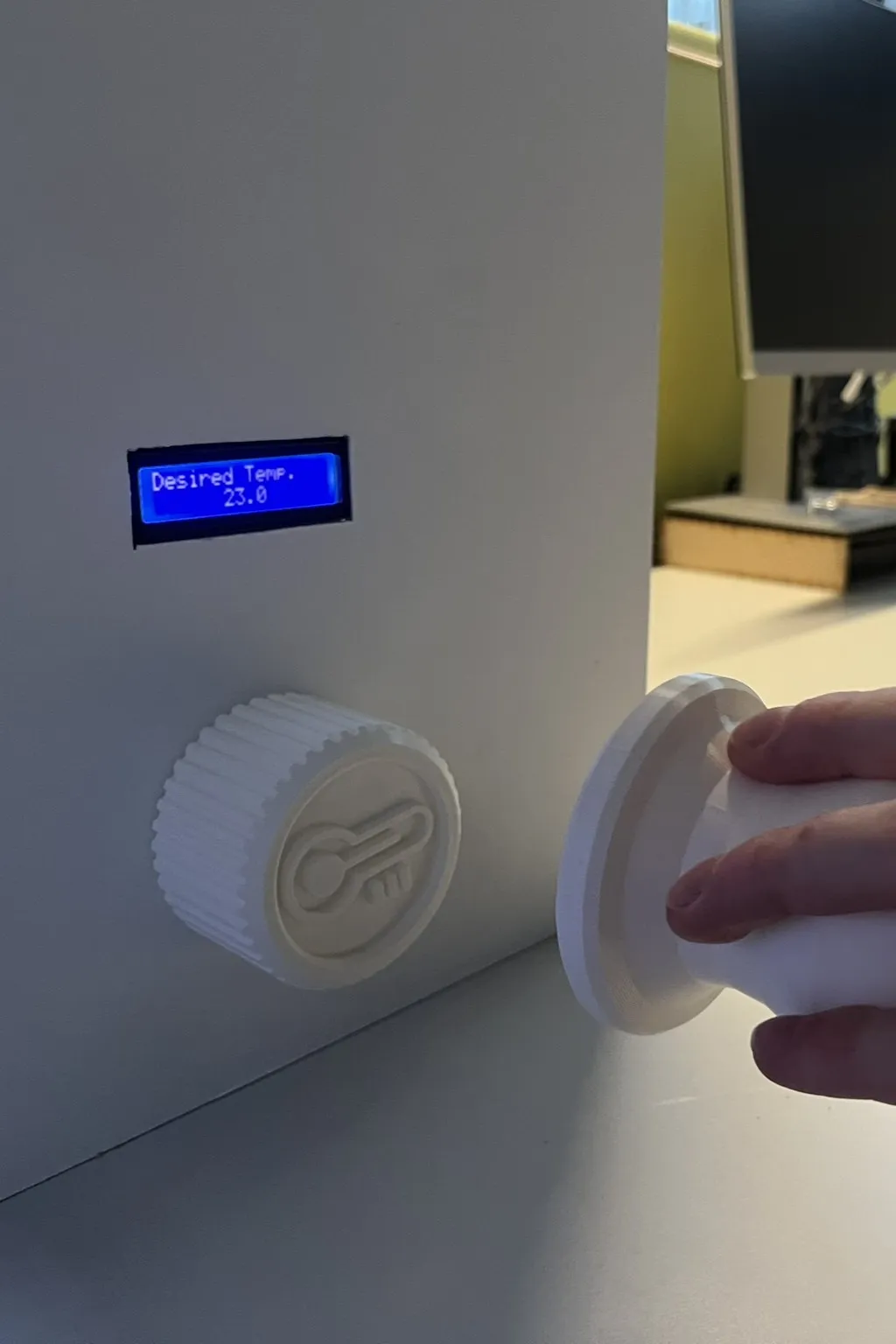
The form borrows the oldest control mental model in the house: the doorknob. You already know what to do with it: lift it, point it, twist. A flat base means it rests on any surface without triggering anything; picking it up is the act that arms it.
The controller is 3D-printed, with the ArUco marker set into its flat underside, the one concession the object makes to the system that watches it. A small indentation in the spherical top marks the midpoint of the range, so the hand can feel how far the knob is turned instead of checking a screen for it.
03Vision
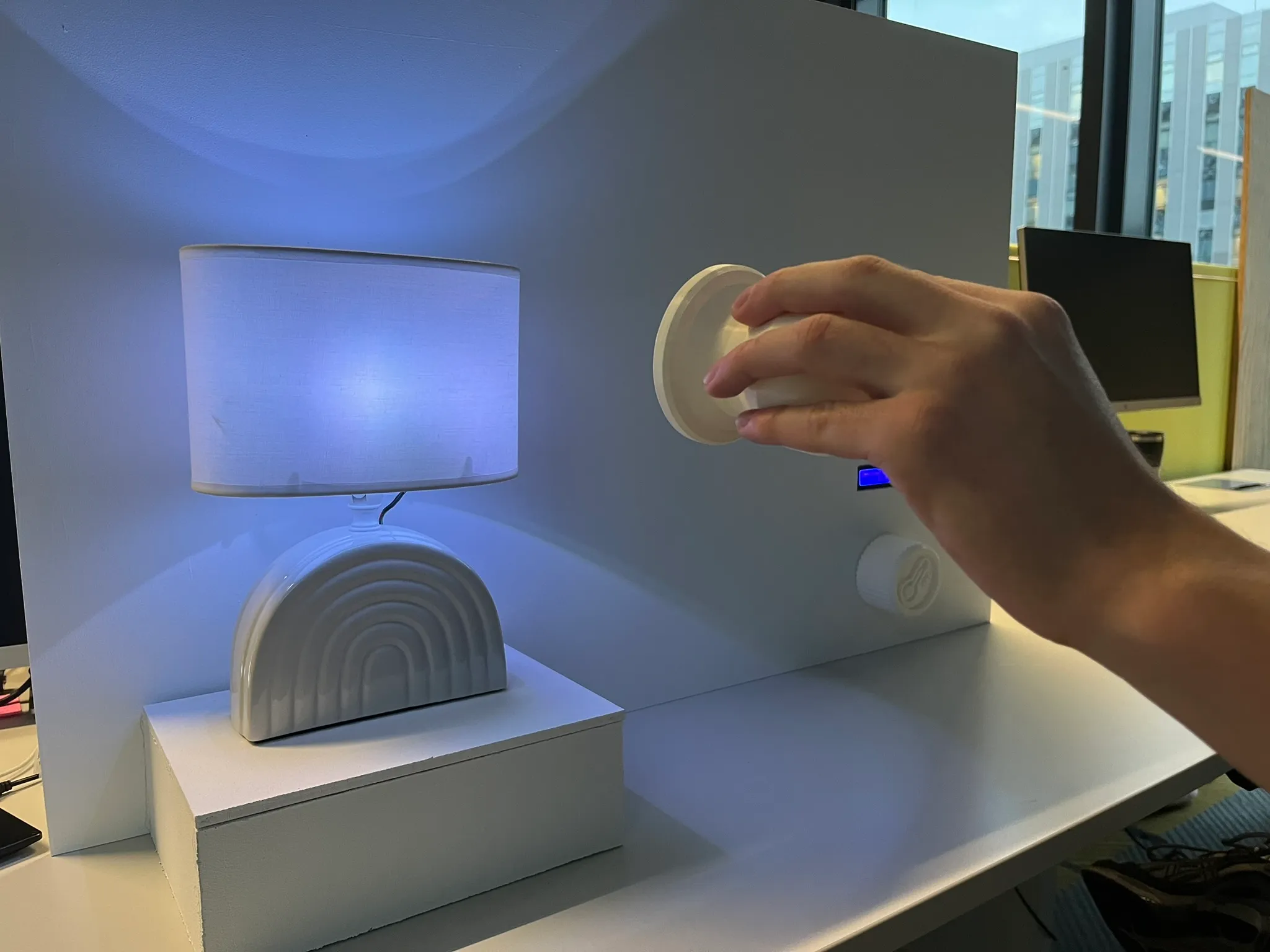
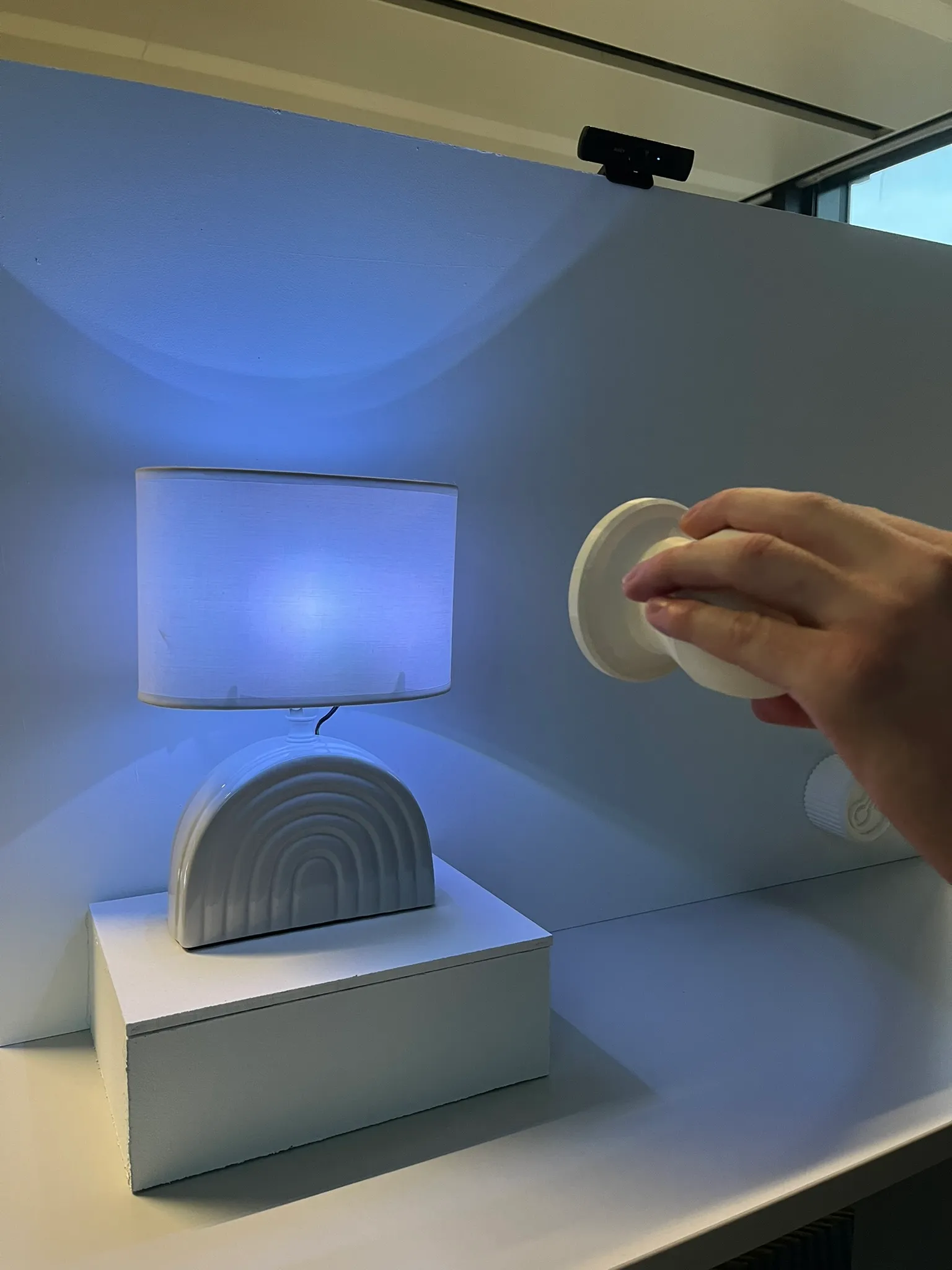
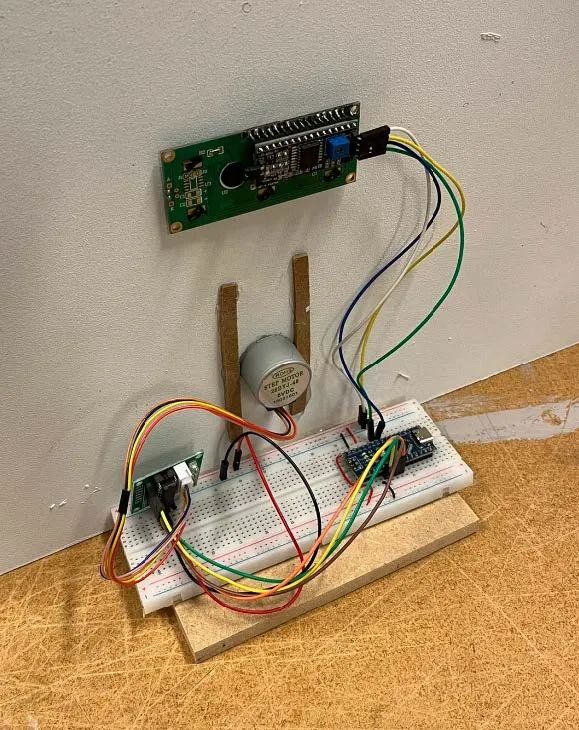
There are no electronics inside the controller at all. A 1080p camera watches the room; a Python script finds the marker and serves its position and rotation, a Processing sketch relays that over a COM port, and an Arduino turns it into device values. Rotation around the vertical axis becomes brightness or degrees; horizontal position picks which of the two devices is listening.
An empty object is what keeps it dependable: no battery to charge, no pairing to fail, nothing to update. The intelligence sits in the room, and the thing in your hand stays a thing.
04Findings
The prototype works: brightness and temperature adjust smoothly, the doorknob needs no explaining, and the whole loop runs without a phone or an account. What it doesn’t have is proof. The project ran on a short timeframe and no user testing was conducted, so that reading is mine, not a study’s.
The real outcome of the report? A camera watching a living room is a real privacy question, not a footnote. And a twist maps cleanly onto brightness and temperature but not onto devices that ask for more than one number.
This project was only ever meant as an exploration, a first step to build on.
Next
Pump-Dive