Case study · for Smart-Ship B.V. · THUAS
Azimuth Controller
A tugboat can point its thrust anywhere in a circle, which makes it wonderfully manoeuvrable and its controls notoriously easy to misread. This control unit lets captains feel direction and power instead of having to guess them.
- Role
- Bachelor’s final project: research, ergonomics and product design, individually
- Client
- Smart-Ship B.V.
- Timeline
- February to July 2021
- Scope
- Research · Ergonomics · Form studies
01Research
Azimuth thrusters can rotate their propeller through a full circle, which makes tugs astonishingly agile, and their controls astonishingly ambiguous. Interviews and questionnaires with captains kept returning to the same two complaints: the units strain the wrist over long shifts, and in the moments that matter most it isn’t obvious which way the ship is about to move.
A market evaluation showed why: existing units are built around the mechanics of the thruster, not around the hand that holds them for twelve hours. The brief sharpened into two words: comfort and direction.
Nobody looks at their hands mid-manoeuvre. The control has to say which way the ship will move, by feel.
02Ideation
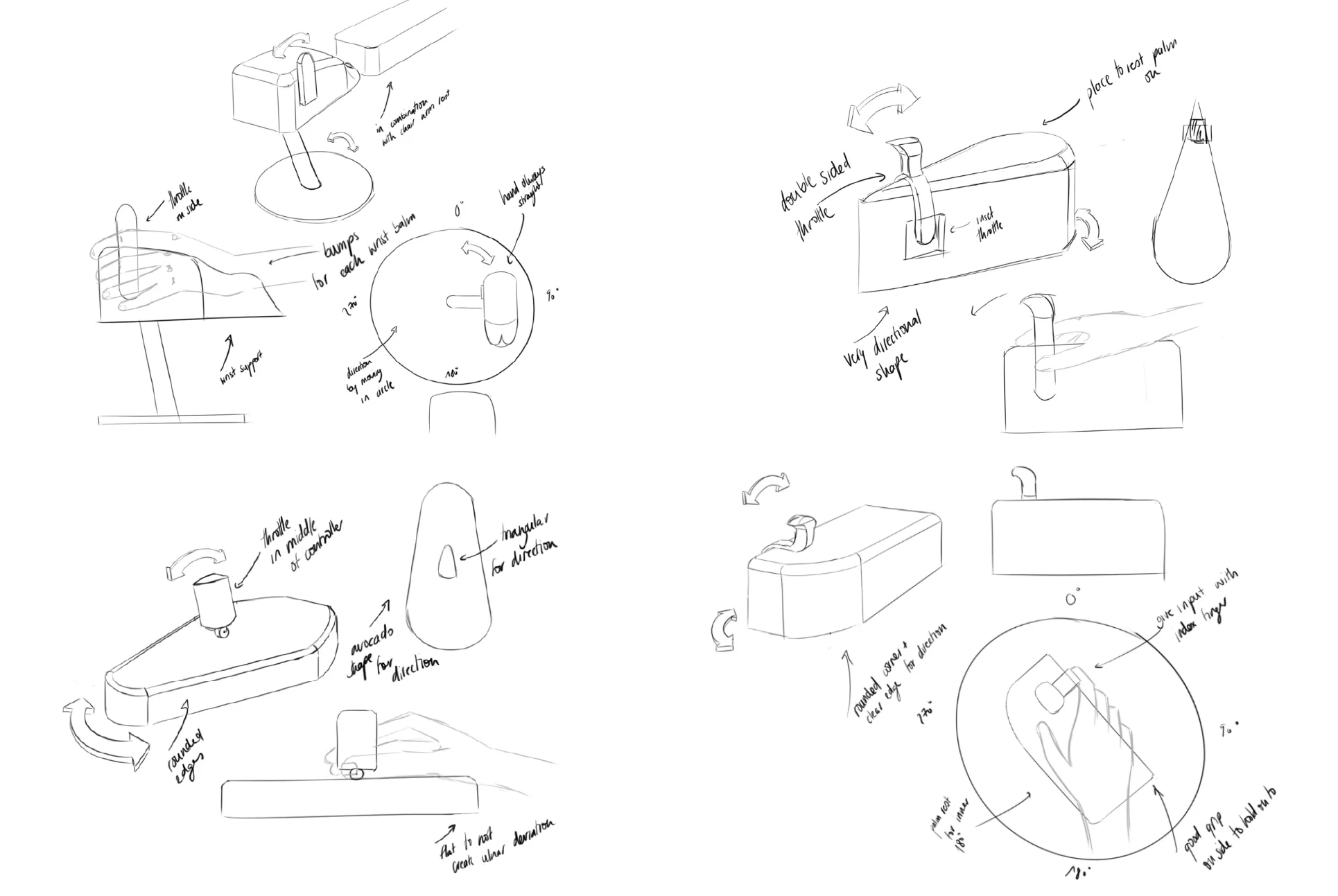
Broad ideation first, which resulted in eight directions, evaluated with Four-Box and PMI methods, then narrowed to three concepts through weighted objectives, each scored point by point against what the captains had actually asked for.
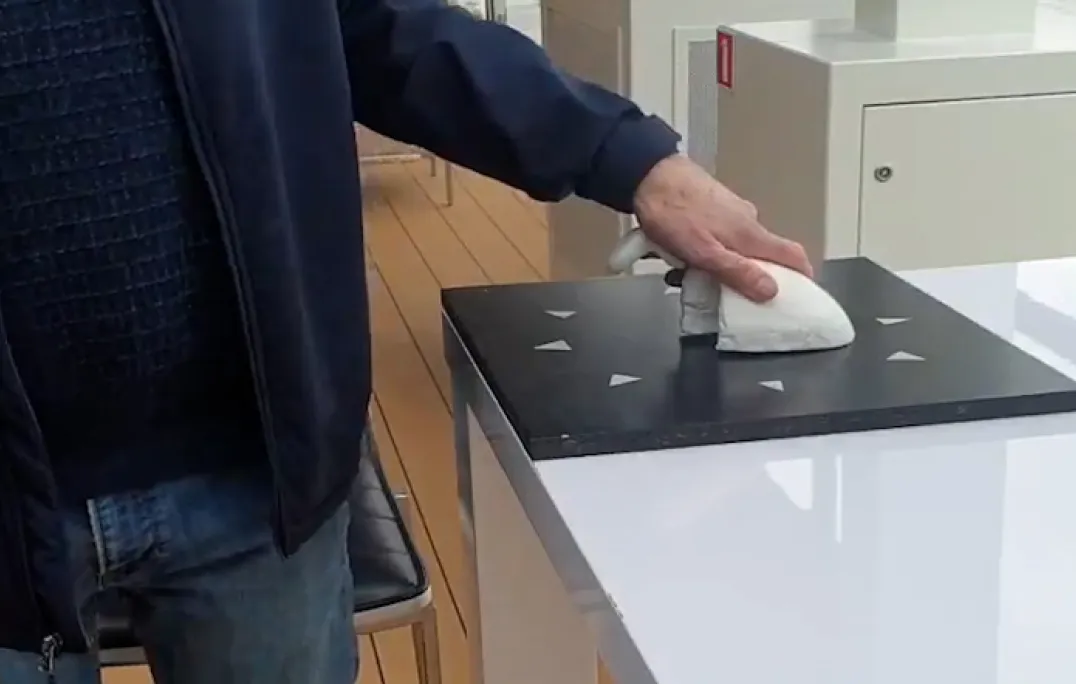
The three survivors were modelled in clay over wood-and-wire supports and tested by a tugboat captain and instructor. Comfort testing at that fidelity is fast and honest: within minutes a shape reveals whether the wrist stays neutral.
03Form
Four style concepts were made of hard foam and tested a final time with a tugboat captain and trainer. The answers came back as verdicts rather than preferences. The gradual palm rest made the body too wide. One throttle caught his finger both giving power and taking it away. One indicator he simply could not see from where an operator sits.
No single concept won. The final unit takes the body of one design, whose indents turned out to be structural to the grip rather than decoration, the throttle head of another design, the only one controllable with thumb and index finger through its whole travel, and another design’s throttle-arm indent, which he started using unprompted to push the throttle without pinching it.
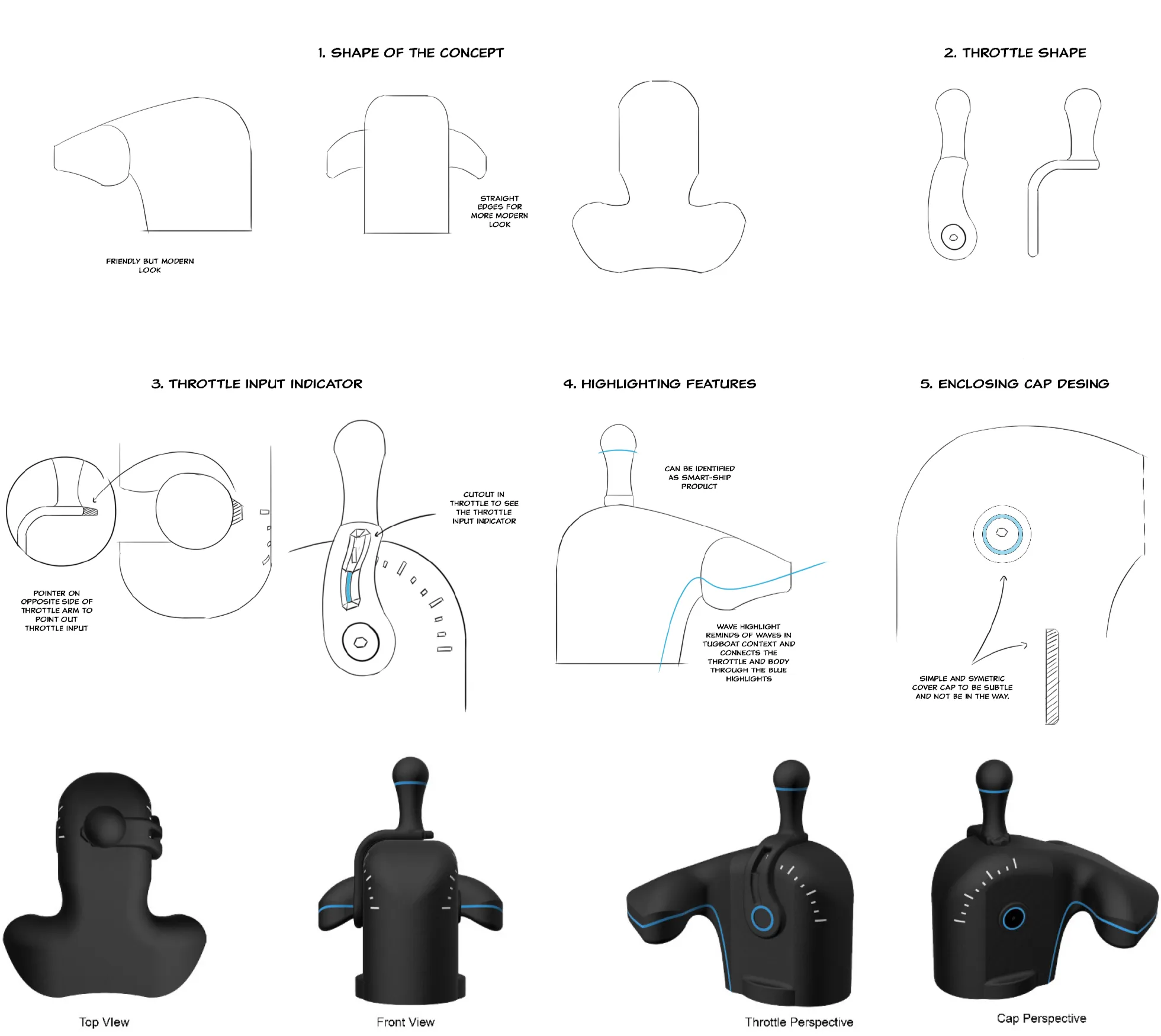
The final form gives each meaning its own movement: the whole body rotates to point the thrust, the throttle throws forward for power. The mapping between hand and ship stays one-to-one.
04Outcome
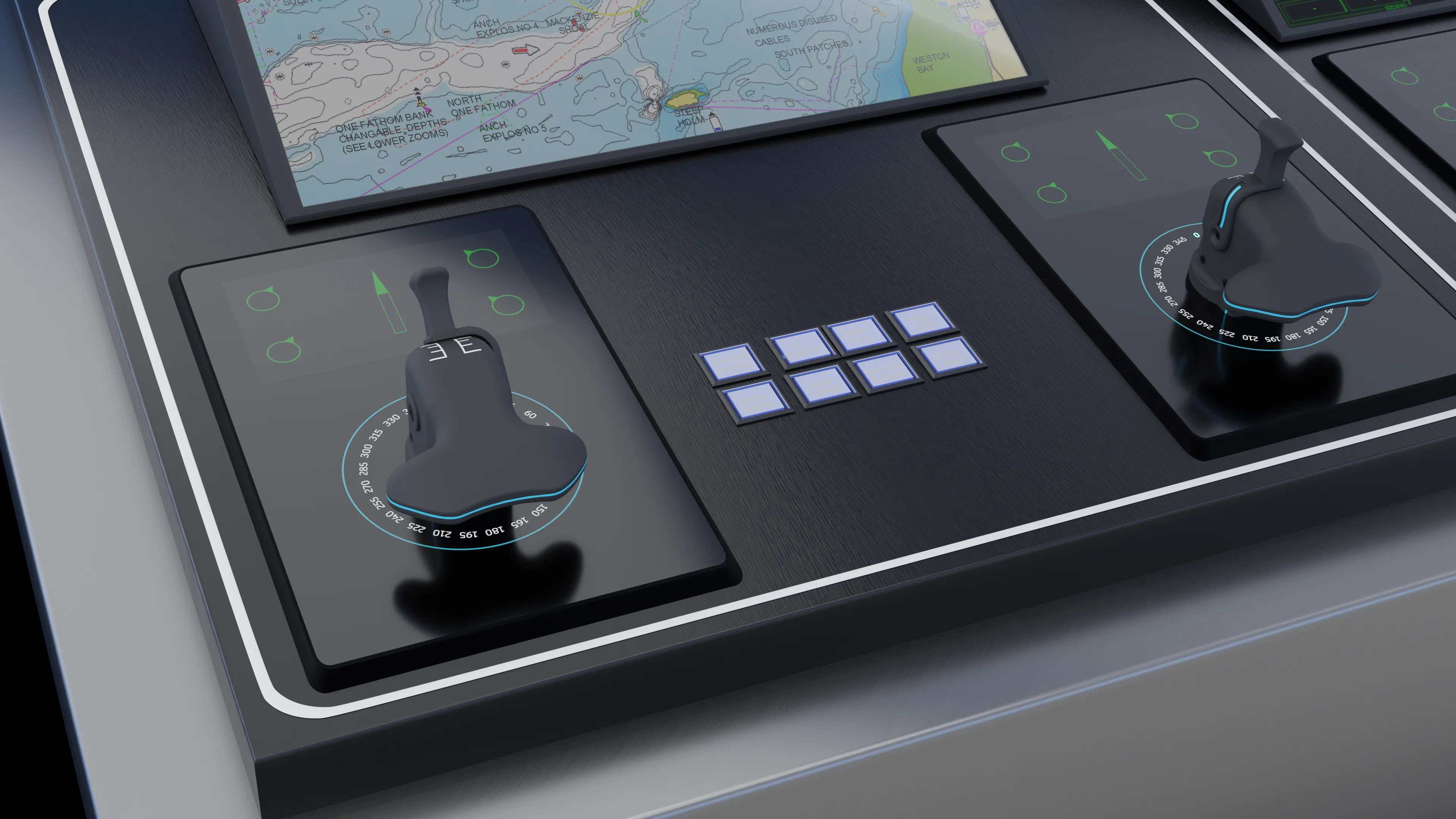
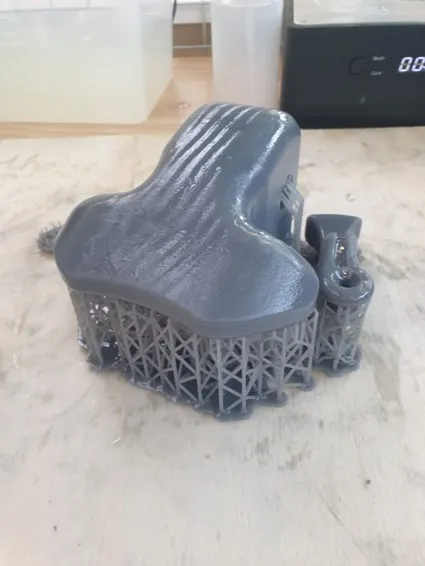
The final unit consists of three printed parts: a body that mounts on Smart-Ship’s own control converter, a throttle, and a cap closing the electronics in behind a 58mm V-ring for water. It was resin-printed so it could be made in house without buying anything new, and it mounts straight onto their existing hardware and simulators.
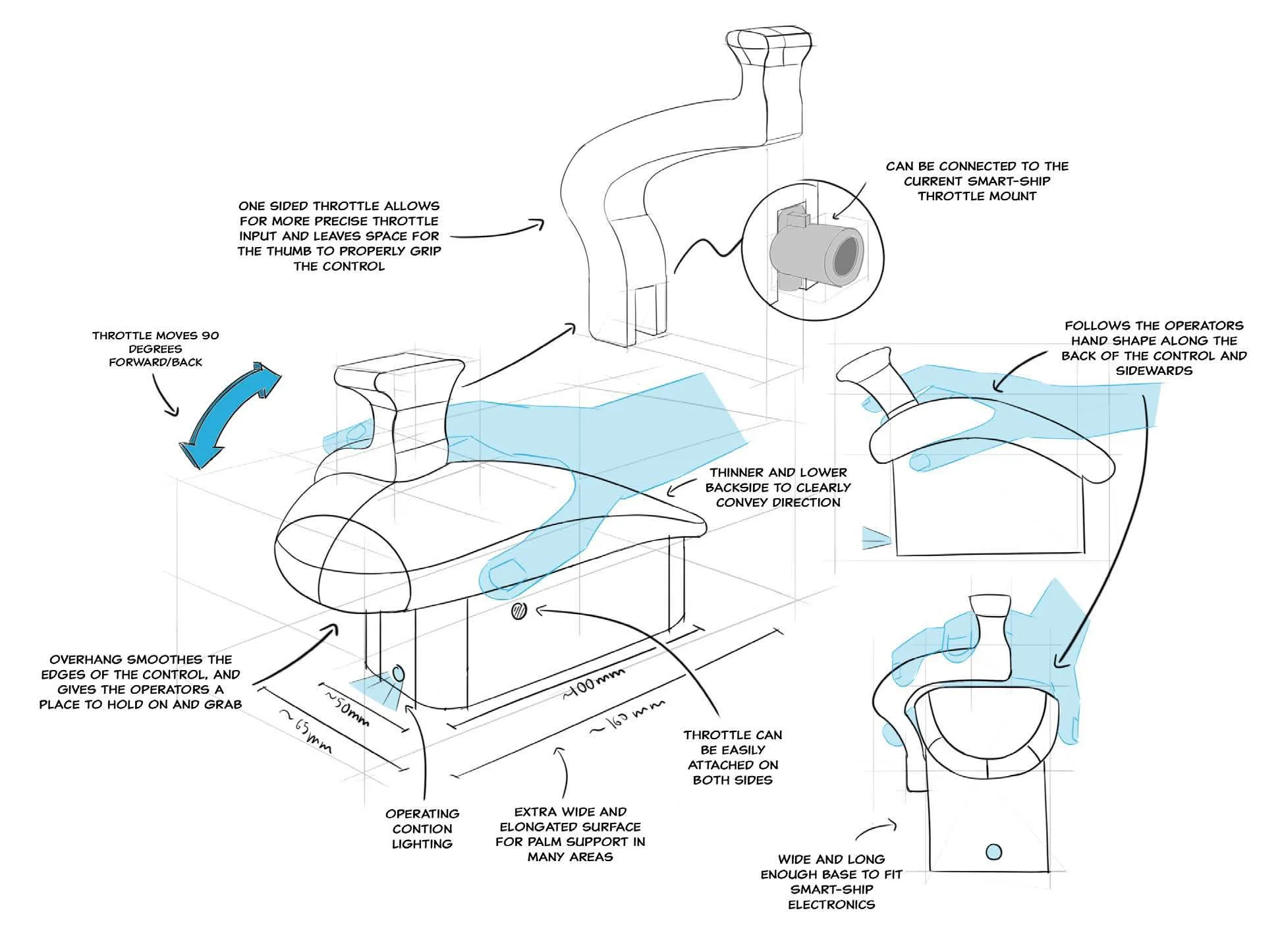
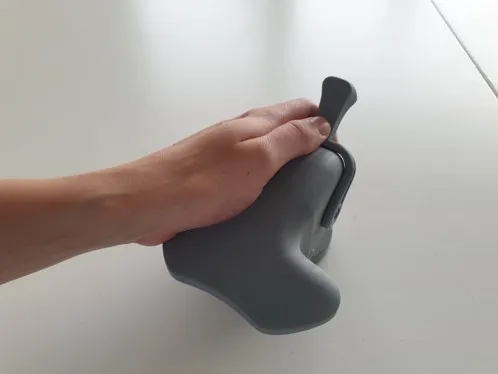
The form does the arguing. Seen from above the body is an inverted T: the two rear extrusions widen the palm rest and curve down at the edges, dropping the wrist into a neutral angle instead of the cocked one the interviews kept describing. The palm rest floats, so fingers can wrap underneath it for fine astern control. Front to back it falls away along the curve of a resting hand, and the sharp difference between front and back is what tells a captain which way the unit points without looking down.
Every requirement and value from the research phase was graded against the final design at the end of the project, alongside recommendations for what Smart-Ship should take further.
Next
Layers