Case study · TU Eindhoven
Gamified Trashcan
Parks fill with litter not because people are villains but because a bin is boring and a bench is right there. This project asked a narrower question than most design work dares to: if throwing something away became a game you played with someone else, would competing or cooperating do more to make it stick?
- Role
- Individual project: build, study design, analysis and paper
- Context
- MSc Industrial Design, TU Eindhoven
- Method
- Research through design · Constructive design research
- Scope
- Prototype · User study (16 participants) · Thematic analysis · Paper
01Question
Littering in parks is a behaviour problem wearing the costume of an infrastructure problem. Bins exist. People walk past them. Designing a better bin does not obviously help, because the bin was never the obstacle: the motivation was.
Behaviour change research splits motivation in two. Extrinsic motivation is the reward you get for doing the thing, and it stops working roughly when the reward does. Intrinsic motivation is wanting to do the thing, and self-determination theory says it grows where three needs are met: autonomy, competence, and relatedness. Most gamification reaches for points, which is the extrinsic lever, and most of it is studied one player at a time. The gap worth entering was the other one: what happens when the play is shared.
The bin was never the obstacle. The motivation was.
02Build
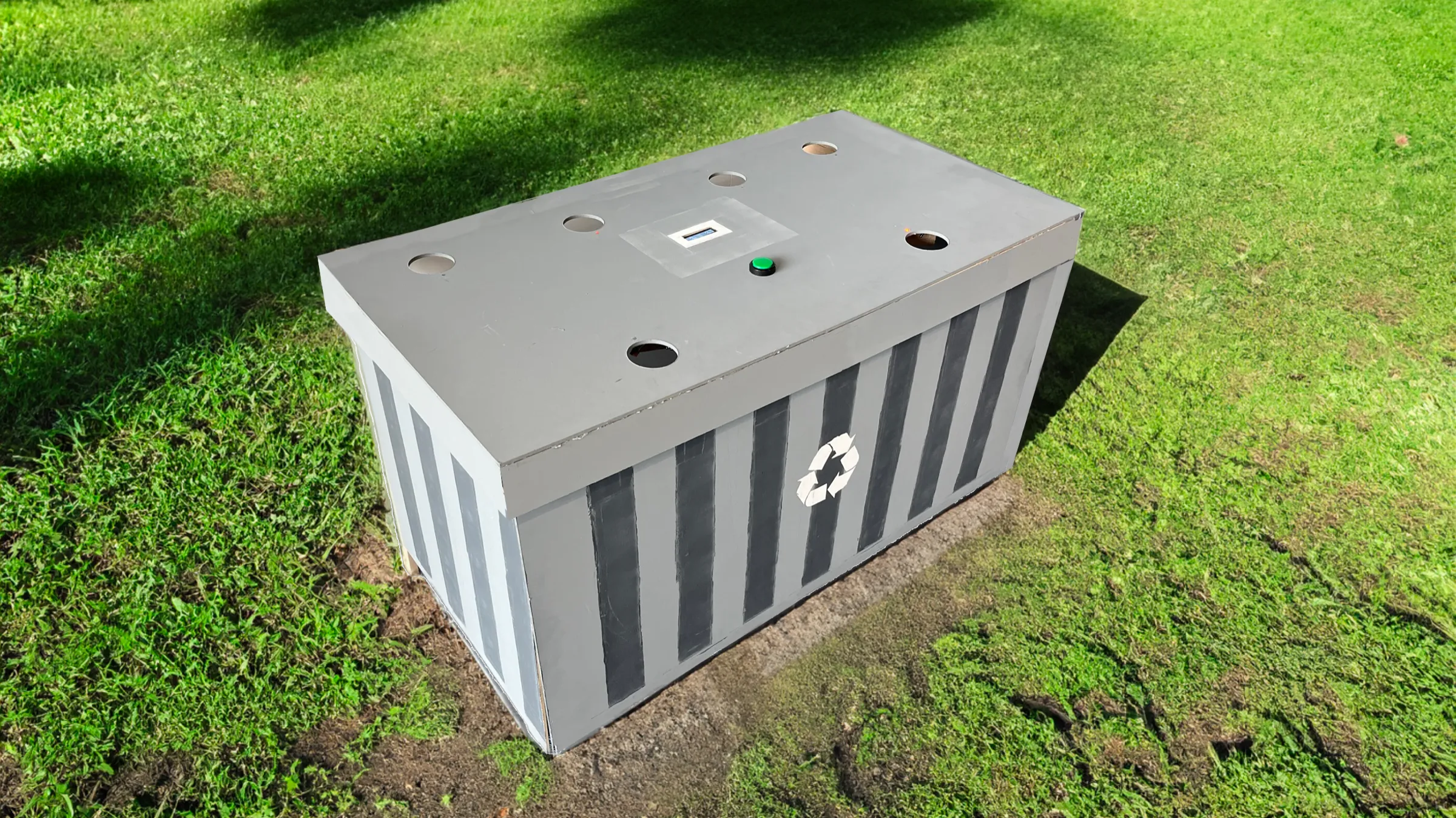
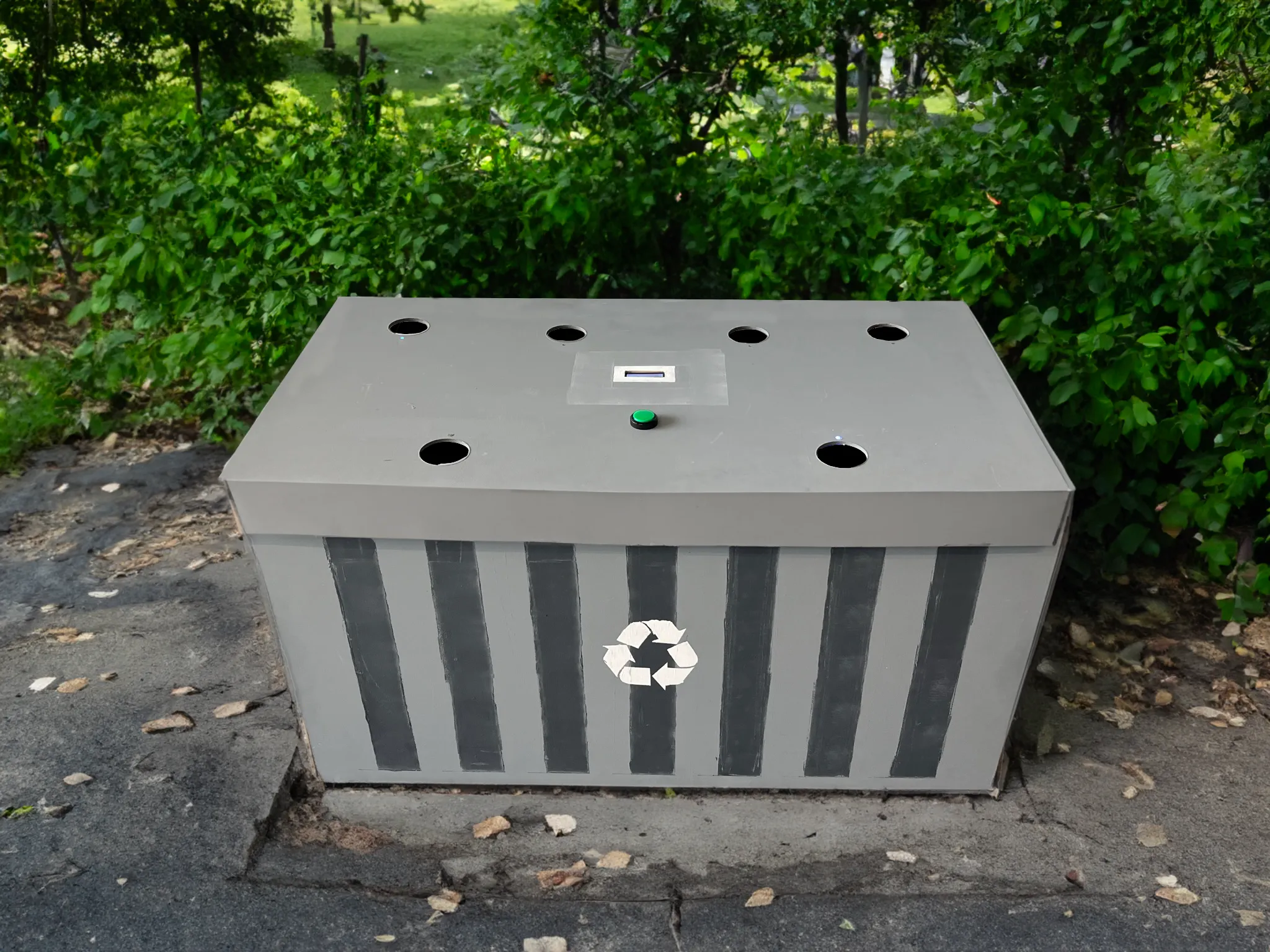
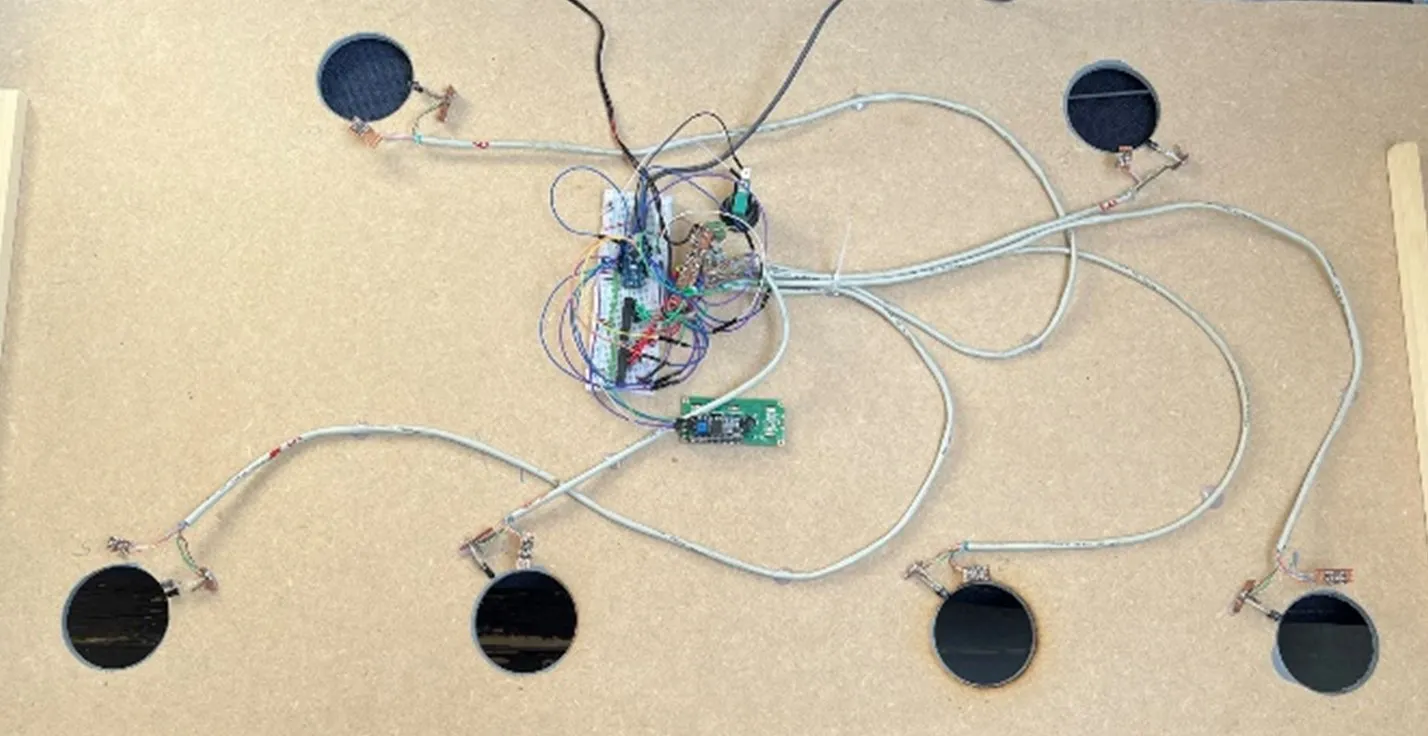
One constraint shaped the whole object: both game modes had to run on the same trashcan. Build two and the study measures the boxes instead of the games. So it is a single portable MDF housing painted to read as a trashcan, six circular holes across the top surface, an addressable RGB LED beside each one for instant feedback, an LCD for the score, and a large green button in the middle that both starts a game and does real work inside one of them. An Arduino Nano drives it, with a pair of I/O expanders to reach every LED and infrared emitters watching the holes for a piece of trash going in.
Competitive mode splits the surface down the middle. One LED on each side turns blue, and the first player to post their litter into the lit hole within a second and a half takes two points to the other’s one. The slower player can still score deliberately: they still get told they did it right, so nobody quits at the halfway mark.
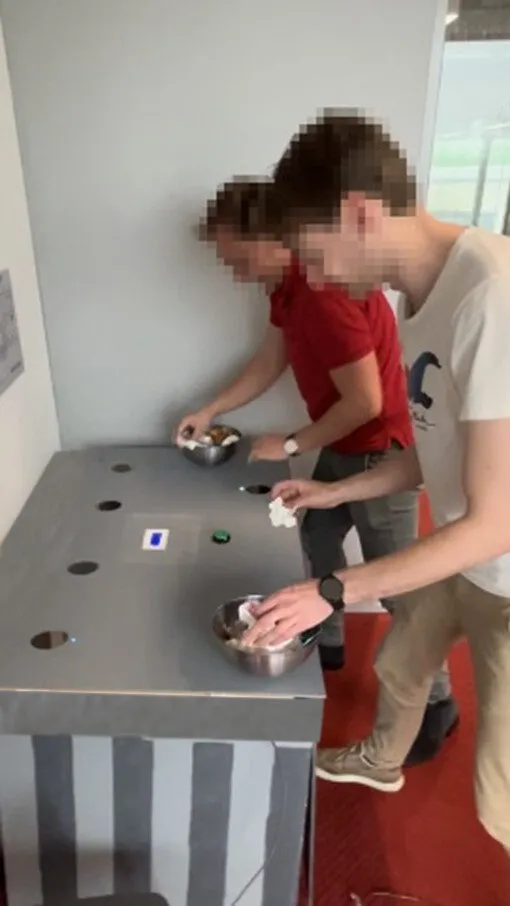
Cooperative mode gives the two players all six holes and makes them take turns ensuring it’s not possible to play alone. Each round one player discards trash while the other has to arm the lit hole with the green button. Arm it too late, or post the trash before your partner arms it, and the shared score drops. Get it right and it rises by two. The mechanics are near enough identical that what changed between the two conditions really is the social arrangement.
03Study
The scenario was built rather than described. Sessions ran indoors, so the room was dressed into a park: birdsong and other parkgoers on the speakers, a sunlit park filling a large screen, a blanket on the floor with snacks on it. Pairs were told they had been picnicking for hours, asked to gather the litter around them, handed a little more, and pointed at the trashcan.
Sixteen participants took part across eight sessions of roughly thirty-five minutes, in pairs who already knew each other well, all students aged 18 to 27, recruited by convenience sampling. Four sessions opened with the competitive mode and four with the cooperative one, so that whatever people felt about the second game could not simply be the fact that it came second.
Each participant filled in the Competitiveness Index first, so that a competitive person enjoying the competitive mode would be visible as exactly that rather than read as a finding. After each mode they picked three emotions off the Geneva emotion wheel. Each session closed with a semi-structured focus group aimed squarely at the three needs the theory names. The transcripts were coded into 35 codes and grouped into six themes.

04Findings
Both modes were enjoyed, and people laughed in both, which is worth saying before the interesting part. Competence turned up in both too, arrived at by different routes. The split came on the other two needs. Competing produced the stronger sense of autonomy, and the reason participants gave was specific: their score was theirs, unaffected by how their partner played. As one put it, you have it in your own hands. Cooperating produced the stronger sense of relatedness, because the goal only moved if both of them moved it.
That is an awkward result, because self-determination theory wants both. Autonomy alongside competence is the engine of intrinsic motivation, which argues for the competitive mode as the better bet for behaviour that lasts. But relatedness feeds intrinsic motivation too, and the cooperative mode owned it. The tiebreaker came from the data rather than the theory: competing players also reported connection, teasing each other, sharing the experience, so the competitive mode picks up some relatedness while keeping its autonomy advantage.
It did not hold for everyone, and the paper says so. Some participants felt more in control cooperatively, because a reliable partner took the pressure off and let them focus on doing it properly. One argued that competing against a friend was itself a form of closeness. Another found both modes equally shared. Sixteen people is enough for qualitative saturation and not enough to make anyone a spokesperson.
Competing
Autonomy: the score is yours alone
Cooperating
Relatedness: the goal only moves together
Competence, both ways
Next
Lucas-Bot